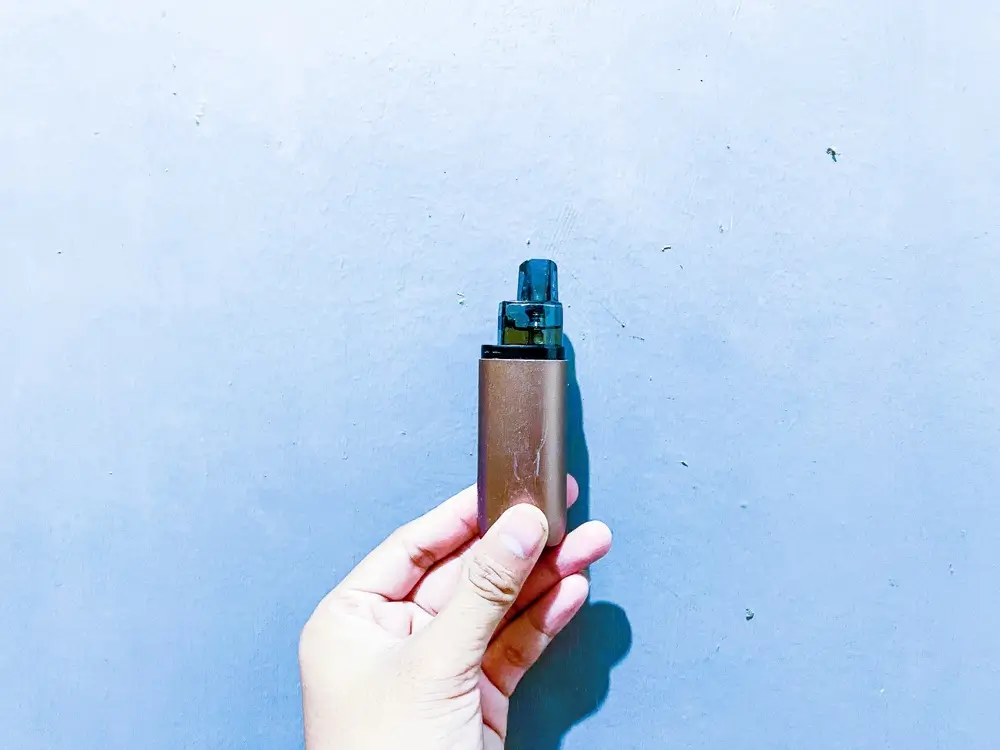

Stepping into a modern airport terminal in 2026 feels more like entering a high-tech science lab than a transportation hub. Flying with vapes in 2026 requires more preparation than ever, as travelers must navigate updated safety protocols, advanced screening technologies, and evolving airline regulations. For those who rely on vaping products, the experience is defined by a complex web of updated safety protocols and digital screening processes that didn’t exist just a few years ago. You find yourself standing before the security scanners, wondering if your specific collection of coils, e-liquids, and high-capacity devices will trigger a manual bag search or a simple nod of approval. Success in this environment is no longer about just following the rules; it requires a deep grasp of how aviation technology and global regulations have shifted to meet the demands of a new era. This guide serves to clarify those complexities, making sure your gear arrives at your destination just as safely as you do.
The Geography of Vaping: Domestic vs. International Realities
Flying with vapes in 2026 means navigating a legal landscape that has split into two vastly divergent paths. When flying within the borders of the United States, you’re moving through a standardized regulatory environment overseen by the Transportation Security Administration (TSA). Within this sphere, the rules are predictable, stable, and focused primarily on physical safety rather than the legality of the substance itself. However, as soon as your flight path crosses into international airspace, the environment shifts from a safety-first model to a compliance-first model. In many jurisdictions, the mere possession of a vaping device is treated as a serious customs violation, regardless of whether you intend to use it during your stay.
Standardizing the American Experience
In the domestic U.S. circuit, your primary objective is to satisfy the TSA’s requirements for battery safety and liquid volume. For travelers flying with vapes in 2026, there is no federal prohibition against carrying vaping hardware, and state-level flavor bans generally do not apply to personal possession for air travel. The challenge here is less about “if” you can carry your gear and more about “how” you organize it to prevent secondary bag searches. Presently, the proliferation of high-capacity disposables and complex modular mods has led to increased scrutiny.
A domestic traveler must realize that even though the hardware is legal, individual airline policies can vary slightly regarding the number of devices allowed. When flying with vapes in 2026, it is important to understand that while the TSA does not explicitly cap the number of mods a single person can carry for personal use, most major carriers have adopted a “reasonable quantity” stance. This usually translates to two or three primary devices. Attempting to board with a dozen kits can trigger an investigation into whether you are engaging in commercial transport, which requires an entirely separate set of manifests and taxes under the updated PACT Act guidelines.
The High-Stakes Patchwork of International Borders
Cross-border travel is where the complexity truly begins. For anyone flying with vapes in 2026, several popular tourist destinations have escalated their enforcement strategies to include immediate fines and even incarceration for the importation of vaping products. The “ignorance is no excuse” clause is the standard operating procedure for customs agents in these regions. You must verify the laws of both your final destination and any layover countries, as moving from one terminal to another in a restrictive country can still expose you to a luggage search.
The Mexico Incident: A Case Study in Total Prohibition
Mexico remains the most critical warning for North American travelers. For those flying with vapes in 2026, the country continues to maintain a strict federal prohibition on the importation of electronic cigarettes despite various legal challenges and local court stays over the years. Travelers arriving at major hubs like Cancun or Mexico City are subject to a randomized “red light/green light” customs system. If you are assigned a red light and a search reveals even a single disposable device or a bottle of nicotine salt liquid, the consequences are severe.
Penalties often start with the immediate confiscation of all gear, followed by financial sanctions that can range from a few hundred to several thousand dollars. Anyone flying with vapes in 2026 should understand that in extreme cases, where a traveler is carrying multiple units or bulk liquid, customs may classify the event as “illegal trafficking,” leading to legal detention. It is vital to note that a doctor’s note or a prescription does not provide a legal shield in Mexico; the ban is on the hardware itself, regardless of the user’s intent or history.
The United Kingdom’s Disposable Transition
Across the Atlantic, the United Kingdom has taken a unique approach. For travelers flying with vapes in 2026, the UK remains one of the most supportive environments for adult smokers switching to vaping, but the 2025 ban on single-use (disposable) vapes has been fully codified and enforced through 2026. If you land in London or Manchester with a suitcase full of disposables, you are technically in possession of banned retail products. While a lenient customs agent may occasionally overlook a traveler carrying a single unit, the official law prohibits retailers and distributors from selling or distributing these devices.
Travelers to the UK should bring refillable pod systems or modular kits. UK regulations continue to allow these products, and a robust retail infrastructure supports their use. When flying with vapes in 2026, it is also important to prepare for the new Vaping Products Duty, which has added a significant tax to e-liquids sold locally. Bringing your own supply is often the most cost-effective path, provided you follow the volume limits for international flights.
Australia’s Pharmaceutical Pivot
Australia represents the most clinical regulatory model in the world. For travelers flying with vapes in 2026, the recreational sale of vaping products is virtually non-existent. The country has funneled all nicotine delivery through a pharmacy-only model. For a traveler, this means that bringing in your own equipment without a valid Australian-recognized prescription can result in the seizure of your property at the border.
Border Force agents are particularly adept at identifying vape hardware on X-ray scans. If you are flying with vapes in 2026 and planning to visit Australia, you must secure medical documentation beforehand or be prepared to navigate their local pharmacy system upon arrival. Even then, Australian regulations limit travelers to pharmaceutical-style packaging and a restricted range of flavors. For many, the simplest solution for a short trip to Australia is to switch to traditional nicotine replacement therapies like patches or gums to avoid the logistical headache at customs.
Liquid Logistics: Managing Bottles and Pods
The management of e-liquids is a science of pressure and volume. When you are flying at 30,000 feet, the air pressure inside the cabin is significantly lower than the air pressure at sea level. This physics reality is the primary cause of the “leaky tank” syndrome that plagues unprepared flyers. To manage your liquids effectively, you must understand both the regulatory limits and the mechanical behavior of your storage containers.
The Science of Cabin Pressure and Leaky Tanks
Every bottle or tank you carry contains a certain amount of air. As the plane climbs, that air expands. If your tank or bottle is completely full, there is no room for that air to go, so it exerts pressure on the seals, the coil housing, and the cap. This inevitably forces liquid out of any available orifice, creating a sticky mess in your luggage or pockets.
The professional protocol for preventing this is simple: leave “headroom.” When filling your travel bottles, leave about 10% to 15% of the container empty. This creates a buffer zone where the air can expand without displacing the liquid. For hardware, the safest move is to fly with completely empty tanks. If you must have a filled pod, store it upside down. This ensures that the air pocket is situated against the coil’s wicking ports, so as the air expands, it pushes through the air-hole rather than pushing liquid through the wick.
The 3-1-1 Mandate for Nicotine Salts and Freebase
The TSA’s 3-1-1 rule remains the gold standard for carry-on liquids. You can bring as many 3.4-ounce (100ml) bottles as you can fit into a single, quart-sized, clear plastic zip-top bag. For most vapers, this provides enough space for a week-long trip. Using high-quality Gorilla-style bottles or glass drippers with clearly labeled, child-resistant caps helps you stay organized and pass security checks more smoothly.
In 2026, security agents are more accustomed to seeing e-liquid, but they still look for consistency. If you have unlabeled bottles with strange colors, you are more likely to be flagged for a manual inspection. Clear labeling not only speeds up the process but also demonstrates that you are a responsible owner who takes the rules seriously. If you use high-nicotine salts, remember that a 30ml bottle is well within the limits, allowing you to carry a concentrated supply without taking up much room in your clear bag.
Checked Luggage: The Safe Zone for Bulk Refills
If you are going on an extended trip and need more than what fits in a quart-sized bag, the checked luggage hold is your friend. Unlike batteries, there is no federal restriction on carrying e-liquid in checked bags. You can pack 500ml or even a liter of juice in your suitcase without issue.
However, you must prepare for the rough handling of checked bags. Double-bagging is a non-negotiable step here. Place your bottles inside a sealed plastic bag. Then place that bag inside a hard-sided container or a padded pouch. Temperature changes in the cargo hold can affect liquid viscosity. This can make seals more likely to fail. Use electrical tape or shrink-wrap around the caps of your checked bottles. This adds extra security. It prevents the caps from vibrating loose during the flight. It also keeps your clothes from smelling like strawberry custard when you reach your hotel.
Hardware Architecture: The Carry-On Only Mandate
The most important rule in this entire manual is the “Cabin-Only” mandate for batteries. This is not a suggestion or a guideline; every airline globally enforces it as a critical fire safety requirement. Lithium-ion batteries, which power every modern vaping device, can enter thermal runaway if damage, short circuits, or extreme conditions affect them. In a pressurized cabin, the crew can manage a battery fire using specialized equipment. In a cargo hold, an undetected fire can be catastrophic.
Lithium-Ion Safety and Thermal Events
A thermal event occurs when a battery’s internal chemistry breaks down. This causes a rapid rise in temperature. It also releases flammable gases. External shorts often cause this. This happens when a metal object, like a key or coin, touches both the positive and negative terminals of a battery. To prevent this, you must never carry loose batteries.
Every spare battery must be stored in a dedicated plastic case or a silicone sleeve. This isolates the terminals and provides a physical barrier against impact. If your device has a built-in battery, like many pod systems or disposables, the same rule applies. The entire device must stay in the cabin with you. Packing a vape with an integrated battery in a checked bag violates federal regulations. Airline staff may pull your bag from the flight. In extreme cases, it can even lead to an emergency landing.
The FAA and TSA have a specific threshold for the size of lithium batteries allowed on planes: 100 Watt-hours (Wh). This limit was originally designed to regulate large laptop batteries and professional camera gear. It also applies to vapes. Most 18650 or 21700 batteries used in vaping fall well below this limit. However, you are still responsible for knowing the math.
Effective Measures for Accidental Activation
A device that turns on in your bag can quickly overheat, melting the pod and potentially starting a fire. You are required to take “effective measures” to prevent this. For devices with removable batteries, the most effective measure is to simply take the batteries out and store them in cases. If you use a device with an integrated battery, use the physical “lock” or “off” function (typically five clicks).
For extra security, many travelers choose to separate the pod or tank from the battery section. This breaks the electrical circuit completely. If the firing button is pressed accidentally in your bag, there is no coil attached to complete the loop, meaning no heat is generated. Lots of high-end devices also feature a “flight mode” or a physical kill-switch designed specifically for this purpose. Utilizing these features is a mark of a savvy traveler who prioritizes safety over convenience.
The Security Checkpoint and Pre-Flight Prep
The security checkpoint is the moment of truth for your organizational skills. Today, many airports have upgraded to those advanced CT (Computed Tomography) scanners. These machines create a 3D image of your bag’s contents, allowing agents to see through layers of clutter. This is both a blessing and a curse; while you often don’t have to remove your electronics, a cluttered bag can still trigger a manual search if the agent cannot identify a specific component.
Navigating Modern CT Scanners and Tray Management
When approaching the X-ray machine, the best strategy is transparency. If you are using a large, modular mod with a lot of metal and wiring, it can look suspicious on a scanner. To avoid a bag search, place your main device in a separate tray or on top of your other items. By presenting it clearly, you show the agent that you have nothing to hide.
For those traveling with smaller pod systems, you can usually leave them inside your carry-on bag, but make sure they aren’t buried under a pile of tangled charging cables. Metals and dense plastics are what trigger the alarms. If you have a collection of coils, tools, and spare parts, keep them in a dedicated “tech pouch.” This keeps the “scary looking” items in one place, making it easier for the agent to clear your bag quickly.
The Modular Kit Breakdown
If you are a hobbyist who travels with rebuildable atomizers (RBAs), wire, and ceramic tweezers, you need to be particularly careful. Tools like wire cutters can be confiscated if the blades are longer than four inches. Ceramic tweezers are usually fine, but a spool of resistance wire can look like a component for a suspicious device on an X-ray.
The pro tip for 2026 is to pre-build your coils before you leave. Bring a few extra pods or pre-built decks so you don’t have to carry a full toolkit. If you must bring tools, check the TSA’s “Tools” category on their website to ensure your specific items are compliant. Most of the time, keeping your building supplies in your checked luggage—where there are fewer restrictions on sharp objects—is the more intelligent move.
Disposable Scrutiny in 2026
The rise of massive, 20,000-puff disposables with built-in LCD screens and complex circuitry has changed how security views these devices. In the past, a disposable was just a small plastic tube. Today, they are essentially miniature computers with significant battery capacity.
Because many of these devices cannot be turned off, they are more likely to be inspected for accidental activation risks. If you are carrying multiple large disposables, keep them in their original retail packaging if possible. This adds an extra layer of protection for the firing mechanism. It also makes the device clear to the security agent. Never attempt to hide a disposable in your checked bag. The battery and liquid density will almost certainly trigger a manual inspection. This can lead to delays or confiscation.
The Social Contract and Arrival Etiquette
Once you have successfully cleared security and boarded the plane, your responsibilities shift from physical safety to legal and social compliance. The airplane cabin is a strictly “no-vape” zone, and the penalties for violating this rule have never been higher. In 2026, air marshals and flight crews are trained to look for “stealthing,” and modern smoke detectors are sensitive enough to detect even small amounts of vapor.
The Legal Risks of Stealthing
The temptation to take a quick puff in the lavatory or under a blanket can ruin your trip. It is a trap. If you are caught vaping on a plane, you do not get a slap on the wrist. You can face federal charges. You may also end up on a permanent “no-fly” list. Fines can exceed $30,000.
Airplane bathroom sensors do more than detect smoke. Many now use multi-gas technology. They can identify the chemical signature of propylene glycol and glycerin. If an alarm goes off, the flight crew must treat it as a fire emergency under law. This can trigger an emergency diversion of the aircraft, and airlines will bill you directly for the cost. If you struggle with long flights, use nicotine pouches or gum. These are 100% legal to use in your seat and provide the nicotine you need without the catastrophic legal risk.
Finding Designated Zones in 2026 Airports
The era of vaping anywhere in an airport is long gone. By 2026, almost every major international hub has moved to a “smoke-free” indoor policy. However, many airports have recognized the need for designated areas and have invested in high-tech “lounges” with specialized ventilation systems.
In contrast, many U.S. airports require you to exit the terminal if you want to vape between flights. You then have to go through security again. Always factor in the time needed for a second trip through the TSA line before deciding to head outside. Before you look for a corner to hide in, check the airport’s digital map for “Smoking Areas” or “Smoking Terraces.” In hubs like Dubai, Frankfurt, or Tokyo, airport authorities often maintain these areas well. They also place them airside, so you don’t have to leave the secure area to use your device.
Respecting Local Customs Upon Landing
Your final challenge is the “First Impression.” When you land in a new country, you are a guest. Even if vaping is legal in your destination, there may be specific local customs or “vape-free” zones that aren’t immediately obvious. Many cities have banned vaping in public parks, on beaches, or near government buildings.
In 2026, social etiquette has become just as important as the law. Vaping in a crowded area where vapor blows into someone else’s face shows disrespect. It can also lead to confrontations. Authorities may even issue fines for “disturbing the peace.” Take a moment to observe the locals. If you don’t see anyone else vaping, it’s best to wait. Use a private space or a designated outdoor area instead. Acting like a “vaping warrior” who insists on clouding public spaces often backfires. It can lead to stricter rules for everyone.
Battery Life and Environmental Responsibility
A final technical note for any traveler: be mindful of where you dispose of your products. If you are using disposables, never throw them in a standard trash can at an airport or hotel. These contain lithium batteries that can be crushed in garbage trucks, leading to fires.
Most modern airports now have dedicated battery recycling bins near the electronics charging stations. Use them. If you can’t find one, hold onto your spent device until you find a proper e-waste facility. Taking this small step helps the vaping community demonstrate responsibility and environmental awareness, which supports preserving our ability to travel with these products in the future.
Final Reflections on Modern Air Travel
Successfully moving through the global aviation network with your gear requires a balance of technical knowledge and situational awareness. By respecting the physics of cabin pressure and the strict safety mandates of the cabin-only battery rule, you protect both your equipment and your fellow passengers. As regulations continue to shift across international borders, staying informed and organized remains the only way to avoid the complications of a changing world. Approaching your travel with this disciplined mindset ensures that your focus remains on the destination rather than the logistics of the journey.